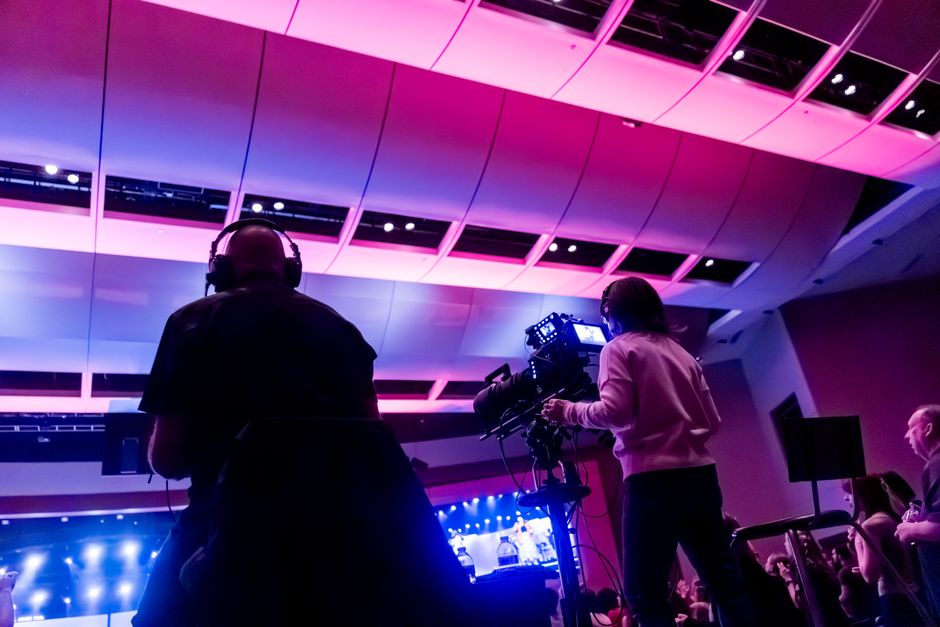
The short version
- Judge the reel by event footage specifically, not just brand films or weddings dressed up as corporate work
- One camera cannot reliably cover a keynote, a panel, and a crowd reaction at the same time. Ask how many cameras and operators are actually on site
- LA corporate event coverage typically runs $250 to $500 an hour for an established team, or roughly $1,500 to $6,000+ for a half or full day depending on crew size and deliverables
- Same-day or next-day social cuts are now a normal ask, not a luxury upsell. Confirm turnaround in writing before you book
- The biggest risk isn't price, it's reliability: badging, AV coordination, and a crew that can read a room without direction
Start with the reel, but watch what it's actually showing you
Every videographer has a reel. The question is whether it shows the thing you're actually hiring for. A gorgeous brand film or a wedding highlight tells you someone can cut music to visuals. It tells you almost nothing about whether they can run a live keynote, catch a panel discussion without dead air, or work a ballroom with house lighting that changes every twenty minutes.
When you're vetting a corporate event videographer in LA, ask specifically for event coverage: a general session, an awards dinner, a product launch, a conference recap. Watch for handheld work that stays steady during audience movement, cuts that respect a speaker's actual pacing instead of chopping every sentence, and audio that's clean even when the room isn't quiet. If a studio can't show you three or four real event jobs, that's information.
One camera is a gamble. Ask how many you're actually getting
A single operator on a single camera is fine for a small internal update filmed in an office. It is not fine for a stage program, a panel, or anything with more than one thing happening at once. When the CEO delivers the one line you need for the recap and the operator is mid reposition, that line is gone. There's no second take at a live event.
Real multi-camera coverage means a wide shot holding the stage, a tight shot on the speaker, and often a third angle on the room or a product. That's what lets an editor build a program that feels alive instead of static, and it's the only way to guarantee you get the line, the laugh, and the crowd reaction from the same moment.
- Ask directly: how many cameras, how many operators, and are they the same person switching angles or genuinely separate cameras rolling together
- Ask who's covering audio. A boom or a wireless lav on the podium matters more than any camera on site
- Ask what happens if a speaker moves off script or the run of show changes on the fly, because it always does
Turnaround: what's realistic and what's oversold
Corporate buyers increasingly want something postable before the event is even over, a same-day recap clip for LinkedIn or Instagram while the full program edit follows in a week or two. That's a completely reasonable ask in 2026, but it changes the crew you need. A same-day social cut requires either an editor on site or a dedicated hand-off workflow the moment usable footage exists, not a team that starts logging clips after they drive home.
Get specific before you sign anything. A full branded recap video with graphics, lower thirds, and a music bed typically takes one to three weeks depending on length and revision rounds. A same-day or next-day social teaser is a separate, faster deliverable built from a handful of key moments. If a studio promises both without explaining how they'll staff it, ask them to walk you through the actual workflow.
Reliability matters more than most people expect going in
The single biggest failure mode in corporate event video isn't a bad shot, it's a crew that creates friction on site. Venues and event producers care about badging, load in and load out windows, cable management, and a crew that isn't wandering into sightlines or interrupting a speaker to reposition a light. A team that's worked real venues around Los Angeles, from downtown hotel ballrooms to studio lots to convention space, will already know how to move through a room without becoming part of the story.
Ask who your point of contact is on the day and whether that person has run corporate events before, not just brand shoots. A crew that shows up, reads the run of show, and adapts without needing hand holding is worth more than a slightly flashier reel.
What corporate event video actually costs in LA right now
Pricing varies a lot depending on crew size and what you're asking for, but here's a realistic 2026 market range for Los Angeles.
- Single operator, half day: roughly $800 to $1,800, usually without a full edited deliverable included
- Single operator, full day (8 to 10 hours): roughly $1,500 to $3,500
- Established multi-cam team, hourly: roughly $250 to $500 an hour per operator, which is where most serious corporate coverage lands
- Two to three camera crew, full day with edited recap: roughly $2,500 to $6,000 or more, depending on edit length and same-day deliverables
What actually moves that number: number of cameras and operators, whether photo coverage runs alongside video, how many edited deliverables you need (a long form recap versus a 30 second social cut versus both), whether you need same-day turnaround, and whether the event runs multiple days or multiple rooms at once. A one camera coverage job and a three camera multi-room activation with same-day social content are not the same category of hire, and the quote shouldn't be either.
Because every event is shaped differently, the honest answer is a scoped quote rather than a flat number off a website. A short discovery call is usually enough to get a real range back within a day.
Photo and video from one team versus two separate hires
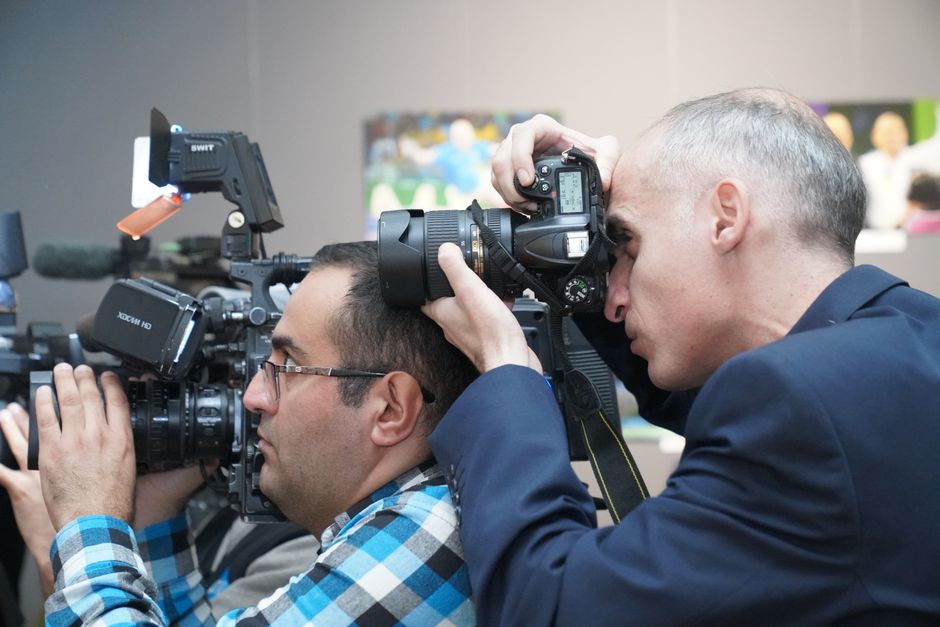
A lot of corporate events still book a photographer and a videographer separately, which means two invoices, two sets of logistics, and two crews potentially competing for the same angle on stage. Booking a team that runs both photo and video coverage together solves that cleanly. One point of contact, one crew that already knows the run of show, and stills and motion coming from a coordinated shoot instead of two strangers working around each other.
It also tends to be more efficient for same-day content, since a coordinated team can flag the best stills for social the moment they're shot instead of waiting on a separate photo delivery days later.
Questions to ask before you book anyone
A short call answers most of this faster than an email chain. Come in with a few direct questions and listen for how specifically they're answered.
- Can I see three examples of live event coverage, not brand films or weddings
- How many cameras and operators will actually be on site for my event
- What's the realistic turnaround for a same-day social clip versus the full recap
- Who's my point of contact during the event if the schedule shifts
- Is photo coverage available from the same crew, or is that a separate booking
A studio that answers all five without hedging is one worth getting a quote from.
Tell us the date, the room, and what you need to walk away with, and we'll build a scoped quote on a quick discovery call.
One team, full production, out of Los Angeles. Tell us about the project and we will map the right approach on a quick discovery call.
Book a discovery call